As global demand for sustainable living continues to grow, food service providers and packaging brands worldwide are actively adopting eco-friendly alternatives to traditional single-use plastics. Among modern sustainable materials, sugarcane bagasse stands out as one of the most practical, durable, and truly renewable packaging solutions.
While the environmental benefits of molded plant fiber are well recognized, practical food packaging applications involve nuanced technical and structural considerations. This guide explores the material characteristics of sugarcane bagasse, standard product formats, and the essential quality and performance factors often overlooked in general discussions.
1. What is Sugarcane Bagasse?
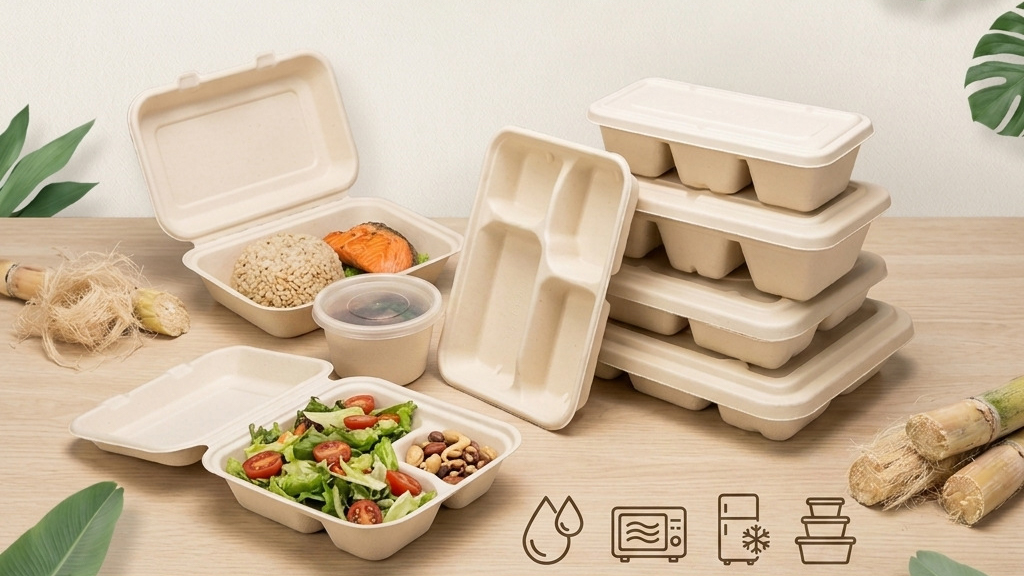
Sugarcane bagasse is the natural, fibrous dry residue left after extracting juice from crushed sugarcane stalks. Instead of treating this agricultural byproduct as waste, advanced thermoforming and molded-fiber processing refine these natural plant fibers into rigid, food-grade tableware and takeaway containers.
-
Renewable & Tree-Free: Utilizing an annual agricultural crop byproduct reduces reliance on traditional wood-pulp paper and petroleum-based plastics.
-
Compostable Plant Fiber: Molded plant fibers break down naturally into organic matter under suitable industrial composting conditions without leaving persistent synthetic residues.
-
Solid Structural Rigidity: Interlocking natural fibers provide high density and dependable mechanical strength during everyday handling and transport.
2. Standard Functional Performance
Molded bagasse containers are engineered to handle a broad range of hot, cold, solid, and semi-liquid food applications:
• Temperature Versatility: Engineered for both hot dishes and chilled storage, supporting standard microwave reheating and refrigerator freezing.
• Natural Barrier Properties: Dense fiber compression creates smooth surfaces that resist grease penetration and moisture softening from standard food dressings and gravies.
• Breathability & Vapor Balance: The microscopic porous structure helps release excess steam from hot fried foods, reducing condensation buildup inside the container.
3. Technical Challenges & Practical Performance Considerations
While general overviews often portray molded fiber as a simple one-to-one plastic substitute, real-world foodservice environments require careful attention to several technical details:
A. Lid Fit & Shrinkage Tolerance Control
Molded plant pulp undergoes slight thermal shrinkage during the high-temperature drying and hot-pressing phase. When pairing bagasse bases with clear plastic lids (PET/PP) or matching pulp lids, precise mold tooling and reinforced rim grooves are essential to ensure a tight, secure snap-lock that prevents transit spills.
B. Prolonged Exposure to High-Temperature Oil & Acidic Sauces
Although natural plant fibers offer excellent short-term grease resistance, extended exposure (e.g., several hours) to extremely hot frying oils or highly acidic dressings (such as vinegars and tomato bases) can gradually weaken fiber surface tension. Proper fiber refining and uniform compression density are key factors in maintaining barrier integrity over extended holding times.
C. Ambient Humidity & Stacking Strength in Long-Term Storage
As a natural hydrophilic fiber, unprotected bagasse packaging can absorb moisture in humid warehouse conditions or during extended ocean freight. Maintaining structural rigidity and top-load stacking strength requires appropriate moisture-barrier outer packaging liners and structural reinforcement ribs along the container sidewalls.
D. Natural Fiber Consistency & Purity
In unbleached natural brown bagasse, subtle fiber shade variations and microscopic plant flecks are natural characteristics of raw agricultural pulp. Advanced multi-stage pulp washing and fine mesh screening ensure a clean, food-safe surface while preserving the authentic, unbleached organic appearance.
4. Common Product Formats and Applications
Molded fiber technology supports a broad selection of standard shapes designed for diverse food service needs:
-
Hinged Clamshell Containers: Available in 1-compartment, 2-compartment, and 3-compartment configurations to keep main dishes and sides neatly separated.
-
Rectangular & Square Meal Trays: Paired with either molded fiber lids or transparent covers, suitable for retail meal preps and commercial delis.
-
Round Salad & Soup Bowls: Engineered with rigid rolled rims to maintain circular rigidity and accommodate standard press-on lids.
-
Plates and Platters: Heavy-duty round and oval formats designed to resist bending under heavy, sauce-rich meals.
5. Customization and Tooling Options
Modern thermoforming capabilities allow precise tooling adjustments to match distinct application requirements:
-
Custom Mold Geometries: Developing proprietary container depths, internal dividers, or custom locking mechanisms for specific food portions.
-
Tool-Pressed Embossing / Debossing: Integrating brand logos directly into the steel mold creates clean, chemical-free visual identification on bases and lids.
-
Natural & Bleached Fiber Finishes: Formulations can be produced in either natural unbleached tan or bleached clean white pulp.
6. Conclusion
Sugarcane bagasse represents a mature, practical step forward in the evolution of sustainable food packaging. By understanding both its natural material strengths and the critical manufacturing tolerances required for high performance, brands and foodservice operators can successfully implement dependable, eco-conscious packaging systems.